
uPVC Window Prices: What Do uPVC Windows Cost?
uPVC windows are the most economical choice for UK homeowners, typically costing from around £400 to £950 per window for double glazing, supply and fit. Here are real 2026 guide prices by style, colour and house size, plus how to pay less.
Check For FundingWhy uPVC is the most economical choice
uPVC is the most popular frame material in the UK for good reason. It is the cheapest option to buy and fit, it needs very little maintenance, and modern uPVC frames deliver excellent thermal performance with A-rated double glazing as standard.
- ✓ Lowest cost frame material
- ✓ Virtually maintenance-free
- ✓ Excellent thermal efficiency
- ✓ Wide range of colours and finishes
Compared with aluminium and timber, uPVC keeps both the upfront price and the long-term running costs down. Explore our uPVC windows to see the full range.
uPVC window prices by style
Guide prices per window, supply and fit, double glazed. Subject to a free survey.
| Window style | Guide price (uPVC) |
|---|---|
| Casement window | £400–£950 |
| Flush casement window | £500–£1,050 |
| Tilt & turn window | £550–£1,150 |
| Sash window | £700–£1,500 |
| Bay window | £1,100–£2,400 |
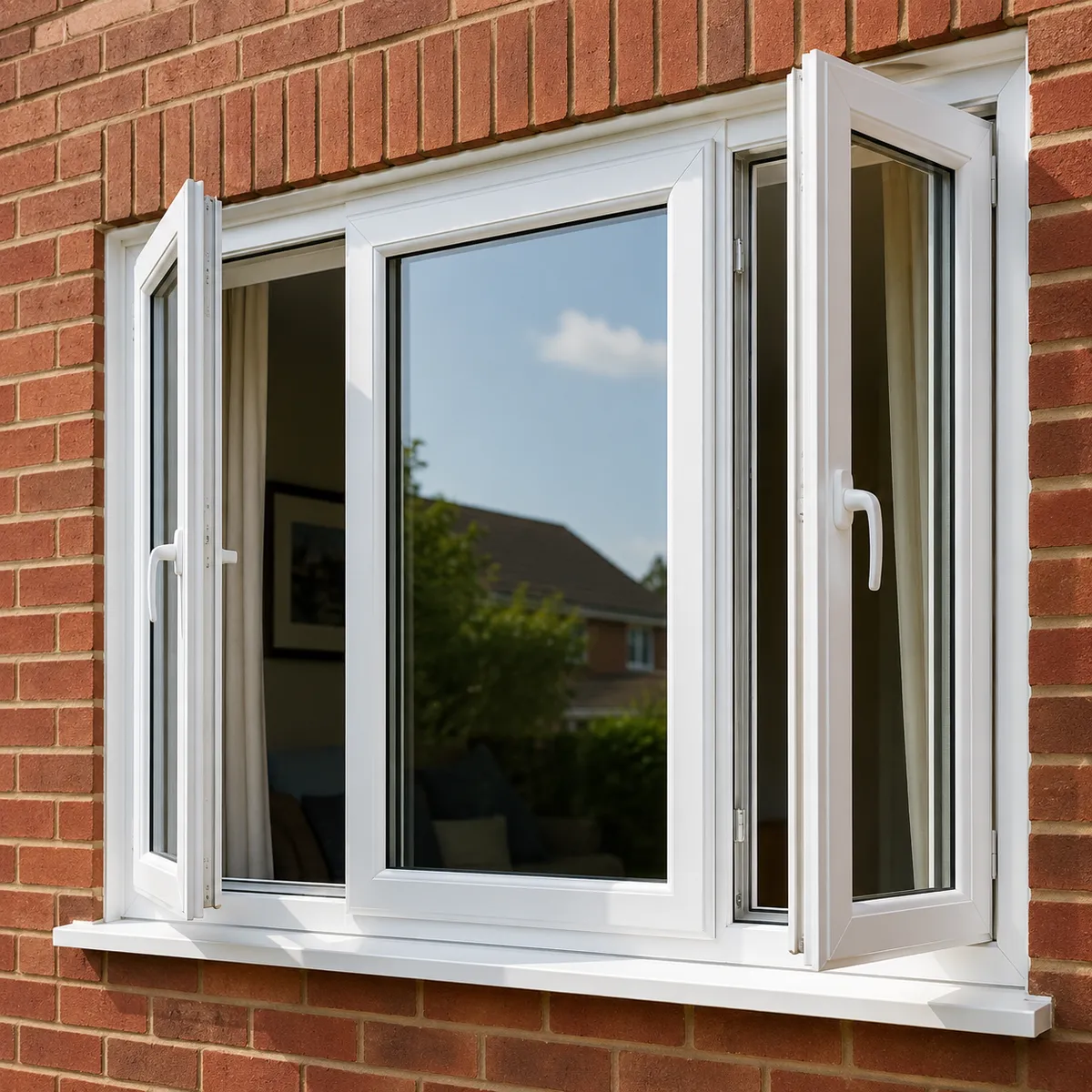
The casement window is the most popular and most affordable style, which makes it the benchmark for most uPVC quotes. Larger and more decorative styles cost more because they use more material and take longer to fit.
uPVC window cost by colour and finish
Coloured and woodgrain finishes typically add a premium over plain white uPVC.
| Finish | Typical premium |
|---|---|
| White (standard) | Baseline price |
| Anthracite grey (one side) | +10–15% |
| Anthracite grey (both sides) | +15–25% |
| Woodgrain foil finish | +10–25% |
Anthracite grey and woodgrain foils are the most popular upgrades. The premium depends on whether the colour is applied to one side or both, so always confirm this on your quote. White remains the most economical finish.
uPVC double glazing cost by house size
Whole-house guide prices for uPVC double glazing, supply and fit. Subject to a free survey.
| Property size | Guide cost (uPVC) |
|---|---|
| 1-bed home | £1,800–£3,200 |
| 2-bed home | £2,800–£5,000 |
| 3-bed home | £4,000–£8,000 |
| 4-bed home | £6,000–£12,000 |
| 5-bed home or larger | £8,000–£16,000 |
Fitting all your uPVC windows in one go is usually cheaper per window, because the survey and installation costs are shared across the whole job. Upgrading to triple glazing adds around £150 to £300 per window.
How to pay less for uPVC windows
uPVC is already the most affordable option, but you can cut the cost further. Many UK homeowners qualify for a double glazing grant or a window replacement grant, and where funding applies you can often spread the cost with nothing to pay up front. Some qualifying homeowners can have their windows installed with no upfront cost at all.
uPVC window prices: your questions answered
How much do uPVC windows cost in the UK?
As a guide, a uPVC casement window costs from around £400 to £950 fully fitted, with flush casements from £500 to £1,050, tilt and turn from £550 to £1,150, sash from £700 to £1,500 and bay windows from £1,100 to £2,400. These are guide prices for supply and fit and are subject to a free survey.
Are uPVC windows cheaper than aluminium or timber?
Yes. uPVC is the most economical frame material. Aluminium typically costs around 25 to 30 per cent more than the equivalent uPVC window, and timber around 50 to 70 per cent more. uPVC also needs very little maintenance, which keeps long-term costs down.
Do coloured or woodgrain uPVC windows cost more?
Usually, yes. Popular finishes such as anthracite grey and woodgrain foils typically add around 10 to 25 per cent over plain white uPVC, depending on whether the colour is on one side or both. White remains the most affordable option.
How much does it cost to fit uPVC windows in a whole house?
As a guide, fitting uPVC double glazing throughout a UK home costs from around £1,800 to £3,200 for a 1-bed, £2,800 to £5,000 for a 2-bed, £4,000 to £8,000 for a 3-bed, £6,000 to £12,000 for a 4-bed and £8,000 to £16,000 for a 5-bed or larger. A free survey confirms your exact price.